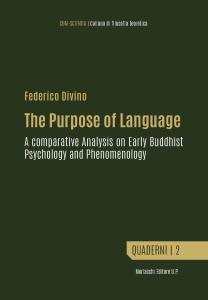
The Purpose of Language: A comparative Analysis on Early Buddhist Psychology and Phenomenology
Keywords:
Language, Phenomenology, Buddhist PsychologySinossi
This work represents the culmination of years of dedicated research on Buddhist psychology within the Pāli Canon. A meticulous analysis of the texts in this Buddhist literary tradition reveals a profound engagement with consciousness, the nature of cognitive processes, and perception—topics examined with remarkable depth and insight. These reflections are further enriched by firsthand experience derived from meditative practice, which provides Buddhist thinkers with a practical perspective that enhances their inquiries into the nature of consciousness in ways that warrant serious consideration by Western phenomenology. In this regard, the present study offers a comparative analysis of these major philosophical questions through a close reading of Pāli Canon texts that explore consciousness, cognitive and perceptual processes, and contemplative experience. What emerges from this investigation is a philosophical examination of the centrality of language as a fundamental key to understanding the phenomenology of experiencing the “world.” The philosophical proposal put forward in this work calls for a reconsideration of Early Buddhism as a crucial interlocutor in advancing research on consciousness and the philosophy of mind. Scholars in this field can no longer afford to overlook its contributions, as engaging in this dialogue offers significant intellectual benefits. The philosophical journey undertaken here intersects with themes such as the phenomenology of the body, biosemiotics, and the philosophy of language; the relationship between language and cognition; studies on mind and perception; and an in-depth exploration of the historical development of these issues within the philosophical framework of early Buddhism, with particular attention to philological and historical perspectives.
Dowloads
Pubblicato
ISSN
Licenza

Questo volume è pubblicato con la licenza Creative Commons Attribuzione - Non commerciale - Condividi allo stesso modo 4.0 Internazionale.
 CC BY-NC-ND, that allows you to download, copy, print a content and share it with others as long as you credit the authors. You can’t modify the content or use it commercially.